Navigating the Celestial Waters: a Guide to Eridanus Constellation
Introduction to Eridanus
Key takeaways
- Eridanus is a large constellation in the southern hemisphere.
- It is one of Ptolemy’s original 48 constellations.
- It represents an ancient river.
- Most of its stars are dim, and while it contains many faint galaxies, there are no Messier objects.
- The brightest star’s name is Achernar.
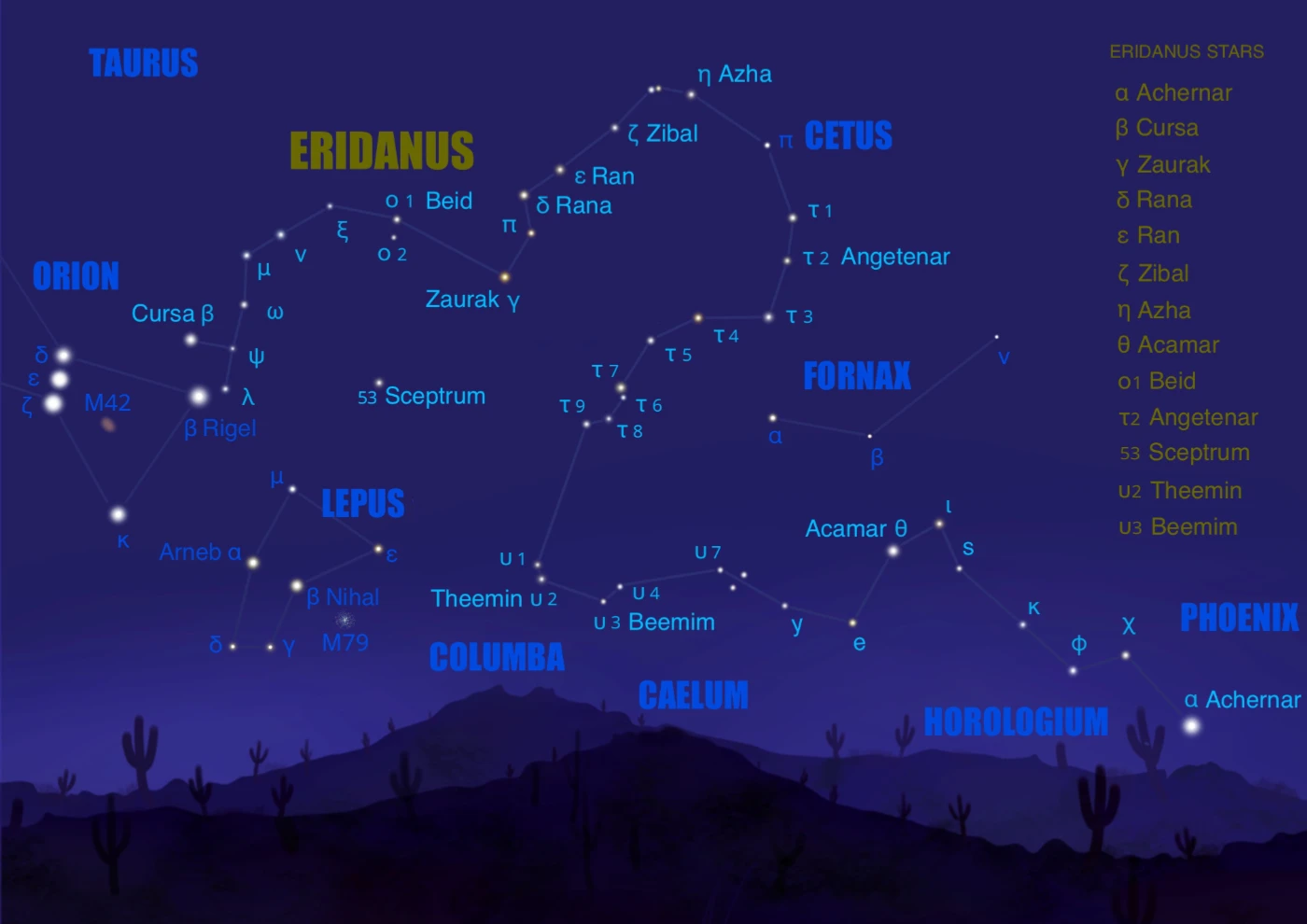
STAR MAP OF ERIDANUS
Arion left the city of Tarantum in Sicily and, full of riches, sailed for Corinth in south Greece.

Soon after Arion jumped into the sea, one of the dolphins came to his rescue.
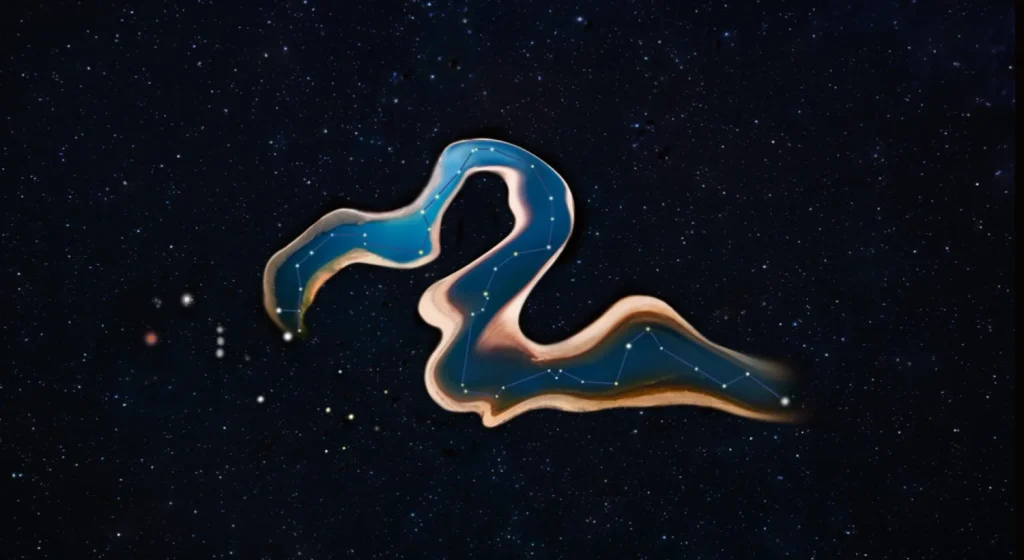
In the winter of the northern hemisphere, the dark, cold nights are adorned by the magnificent Orion constellation and sparkling Sirius, the Dogstar. Skywatchers eagerly await the first glimpse of the rising bright star Bellatrix, marking the right shoulder of Orion, the hunter, as this signals that the rest of the Orion constellation, still hidden below the eastern horizon, will soon rise in all its glory. However, another, elusive constellation has already risen in the silence, often unnoticed amid the moist air that hides its tranquil celestial waters. This constellation, flowing eternally from the temperate north to the deep tropical south, is the mythical river Eridanus.
Eridanus is a mysterious river whose waters hide unknown creatures and even its own identity. By its celestial banks, Orion is fighting with Taurus, the Bull, and nearby constellations like Lepus, the hare, and Columba, the dove, find refuge in the riverine vegetation. However, none of these neighboring constellations have any relation to the story of Eridanus. The only ones connected with Eridanus are the constellations Cygnus, Hercules, and Argo, and of these, Hercules and Cygnus lie particularly far from Eridanus in the summer skies. It is almost as if Hercules and Orion divided the sky and each chose a season. Hercules chose the summer sky, and Orion the winter one.
The myth of Eridanus
Myth at a glance
Eridanus depicts the river where Phaethon, the son of Helios, fell. Phaethon attempted to drive the chariot of the sun but lost control of it and almost set the land on fire. To avoid the destruction of the earth, Zeus struck him with lightning, and he fell on the river Eridanus.
But what is the identity of this celestial river? In short, Eridanus is a mythological river, the son of Oceanus (the Ocean) and Tethys (a Titan and daughter of Uranus, the Sky, and Gaia, the Earth). Its identity is vague, but it is believed that it is a river of the West. Although there is a small river in Athens, right next to the Acropolis, named Eridanus since antiquity, and nowadays almost all its flow is underground, a more likely candidate seems to be the river Po, otherwise known as Padus. It’s the largest river in Italy, flowing west to east in the country’s north. Other candidates are the rivers, the Rhone, or the Nile. We encounter Eridanus several times in ancient Greek literature, such as on the march of Hercules to the garden of the Hesperides and on the march of the Argonauts from the land of the Celts to the Adriatic.
Now let us dive deep into mythology and history and explore the myth of Eridanus and the many mythical personalities that appear in it, each with an important role to play. The myth tells us that Phaethon (the brilliant one), the mortal son of the god Helios (the sun), fell into the river while driving the chariot of the sun and was hit by a lightning strike from Zeus. His five sisters, the Heliad nymphs, buried him on its banks and were transformed into willows that continually mourned the death of their brother. According to Aratos, in the mayhem, the Eridanus River was destroyed and placed among the stars.
Since Phaethon is the most important person in the myth of Eridanus, we will count on his story to shed light on the myth of the celestial river. Phaethon was the mortal son of the god Helios and the nymph Clemene. Helios was the god of the sun, and his two sisters were Selene (the moon) and Eos (the dawn). In the first years of his life, he didn’t know who his father was until Clemene revealed that he was the son of the god Helios. Phaethon felt a burning desire to meet his father, and Clemene urged him to visit his father by traveling to the far east of the antique world, India. The land of the rising sun, according to the ancient Greeks.
After a long and difficult journey, Phaethon arrived at his father’s palace and was immediately dazzled. The palace of Helios was beyond anything he had imagined. He was struck by its sparkling magnificence, as practically everything inside was crafted in bronze, silver, ivory, and gold by the god Hephaestus himself. Phaethon met his father, and in the ensuing conversation, Helios confirmed that Phaethon was his son and, as a gift, offered to grant him any wish.
Without giving it a second thought, impulsive Phaethon asked to drive his father’s chariot for just one day. Helios, realizing the danger, begged Phaethon to change his mind. He cautioned that the horses that drive the chariot are very unruly, and even Zeus would avoid such a task. In addition, who in their right mind would dare to navigate a sky full of traps and monsters like the constellations Cancer, the lethal Scorpio, the fearsome Taurus, or the mighty carnivore Leo?
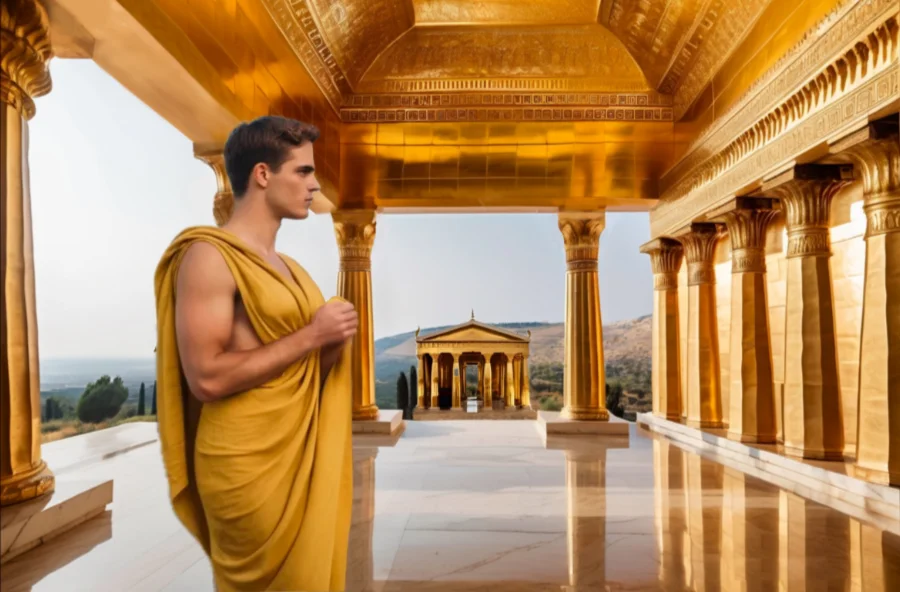
Phaethon was too young and inexperienced to drive the chariot of Helios.
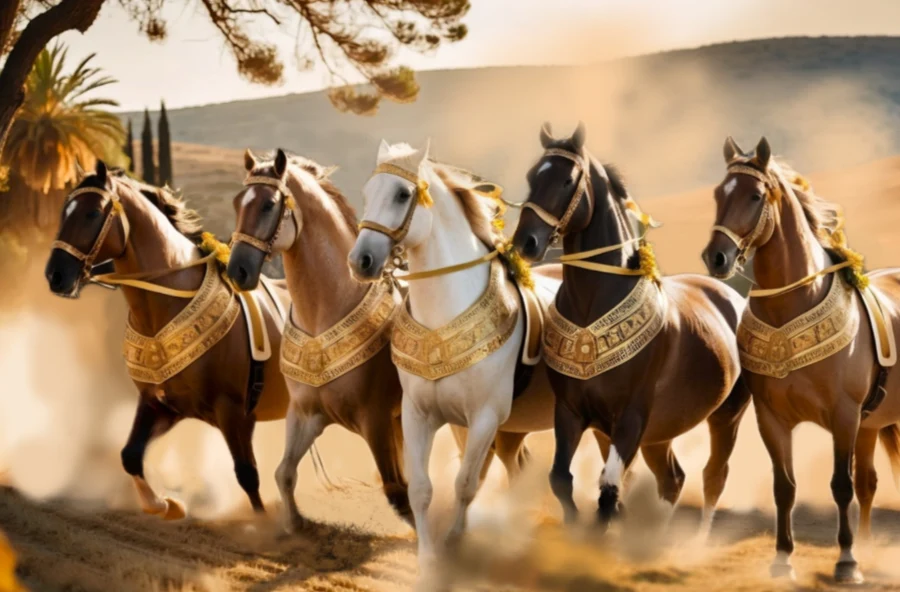
Every time the uncontrollable chariot veered too close to Earth, it caused huge fires.
Helios, unable to change his son’s mind, advised him as best as he could and watched powerless as Phaethon took to the sky with his resplendent chariot. Soon, the journey became a tragedy. While passing through the constellation Scorpio, he panicked and lost control of the horses. The uncontrollable chariot was flying too close to Earth, setting everything on fire, or too far away, covering the land with ice.
The blazing heat of the low-flying chariot was so intense that, according to Ovid, it created the Lybian desert and caused darkness on the skin of the Aethiopians. The situation grew so dire that the goddess Gaia (Earth) urged Zeus to intervene. Which he did, striking the chariot with lightning and killing Phaethon. The burning chariot fell into a river that was immortalized among the stars. That river was most likely the Padus (Po), the Rhone, or the Nile.
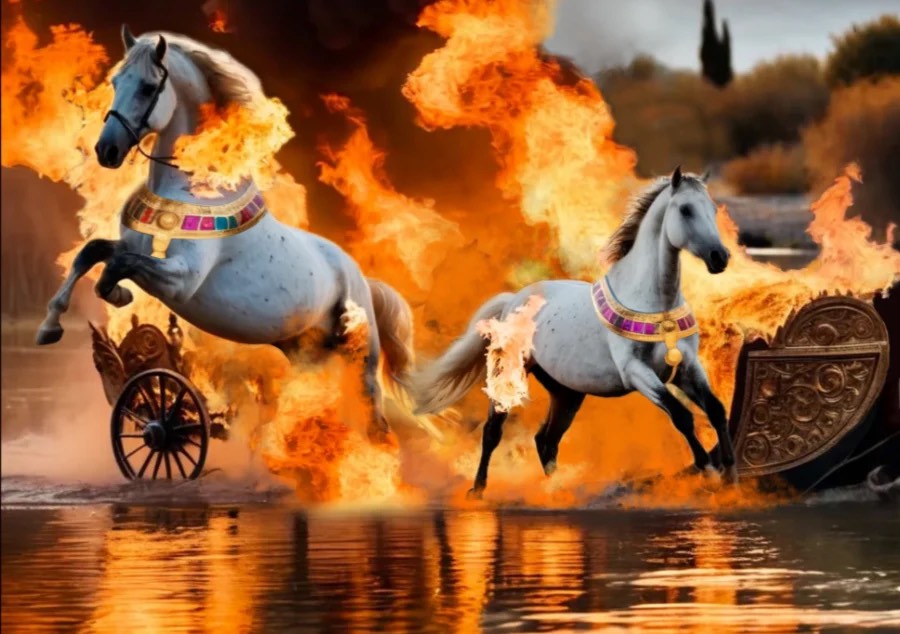
Zeus struck the chariot with lightning, and it fell into the Eridanus River.
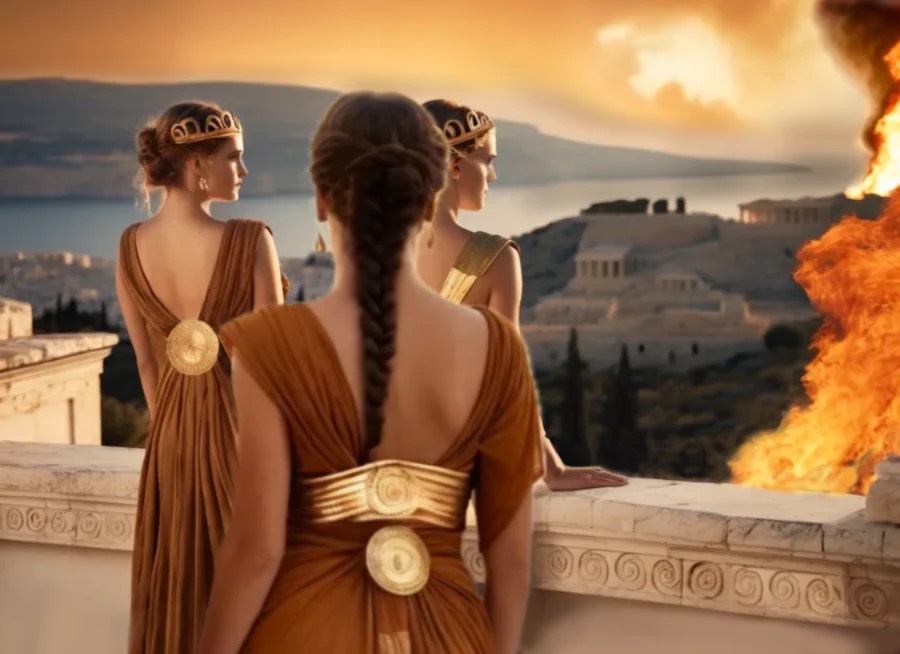
As fires spread across the land, the Heliad nymphs learned about the tragic fate of their brother.
Phaethon’s death spread sadness across the land. Darkness covered the land as Helios mourned and did not rise that day. The five sisters of Phaethon, the Heliads, kept mourning on the banks of Eridanus until the Gods, moved by their grief, turned them into drooping willows and their tears into amber. The same fate also befell Phaethon’s dear and inconsolable friend, Cygnus (Swan), whom the god Apollo gifted with a very melodious voice. Zeus turned him into a constellation, the Swan, singing the melodious swan song at the time of its death, and placed him among the summer stars, next to the equally melodious Lyra constellation, far away from the fateful river.