introduction
Key takeaways
- Leo, the lion, is a zodiacal constellation in the northern hemisphere.
- It is one of Ptolemy’s original 48 constellations.
- It represents a mythical lion killed by Heracles.
- It contains five Messier galaxies.
- It is the home of the famous Leonid meteors.
- The brightest star’s name is Regulus.
Beginner’s map of TAURUS
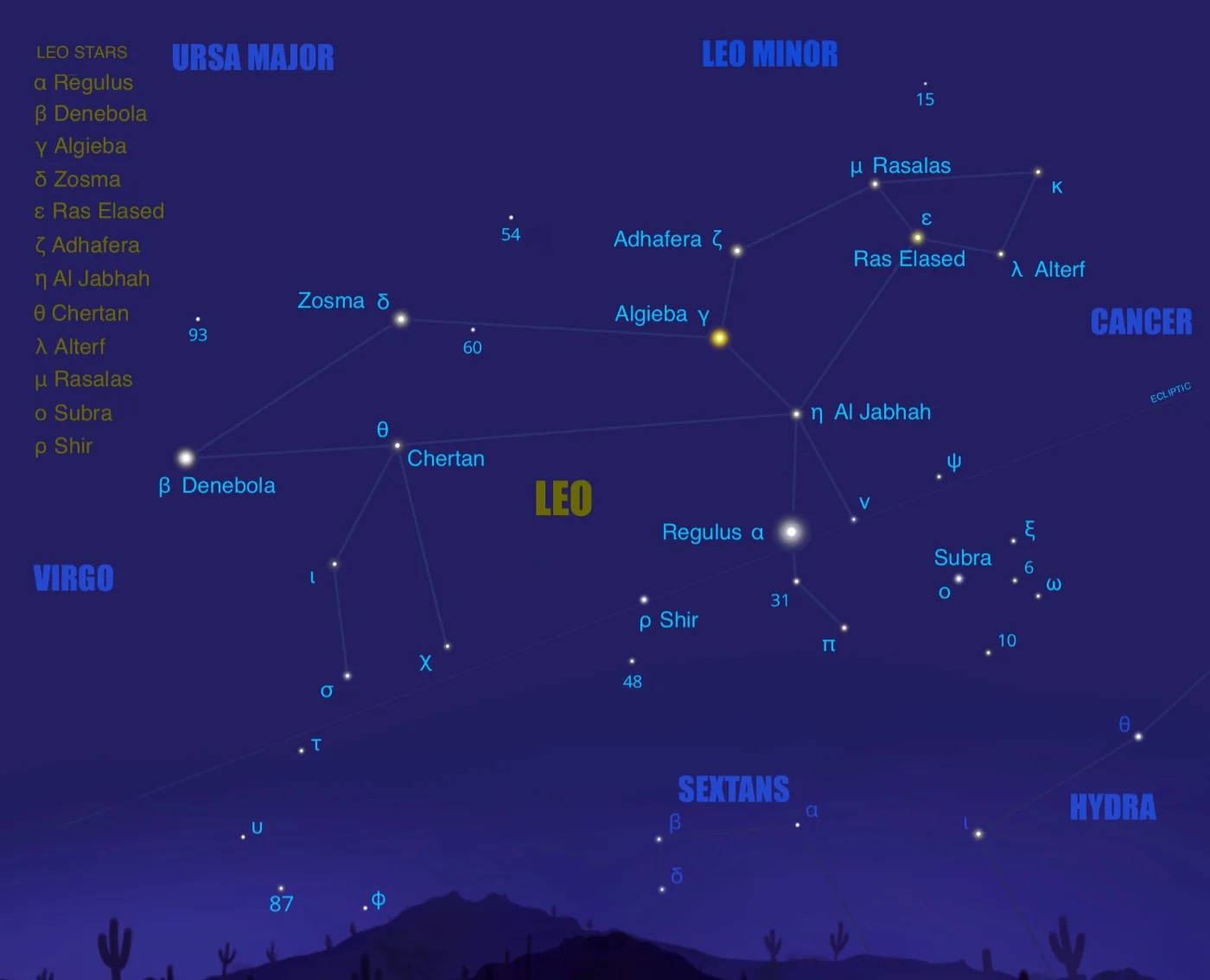
introduction
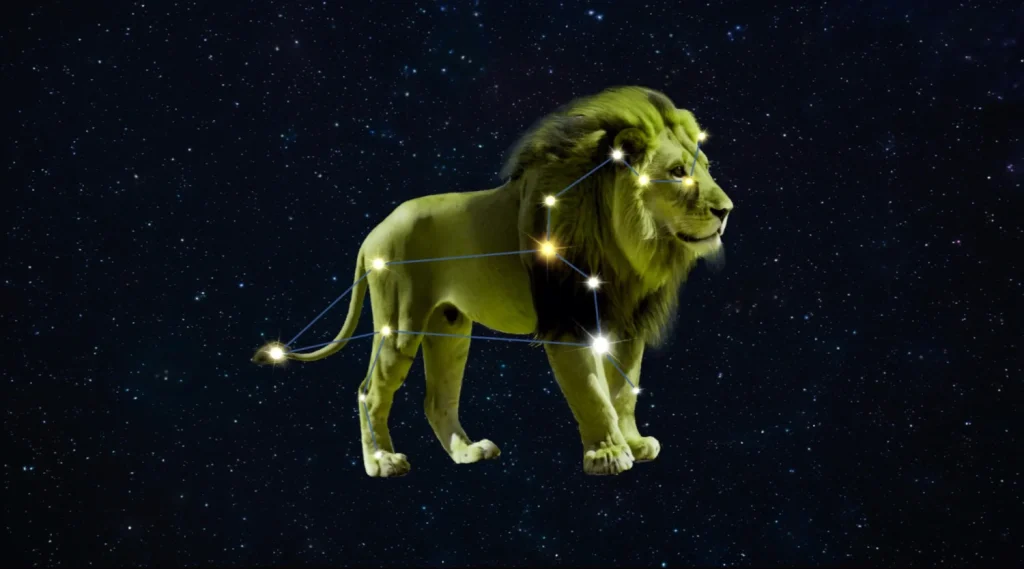
Leo is the oldest and most important feline in the sky. Although there is a lynx among the stars and there used to be a cat, none of these can match the grandeur of the king of Africa. The Leo constellation has long fascinated those who look at the night sky, and due to its distinctive shape, it has been associated with a lion in various cultures. Its imposing outline and size, combined with its rich mythology, which links it to Hercules, the Nemean lion, and the seasonal floods of the Nile, have captivated humanity since antiquity. After all, while in Greece Leo claimed the lives of many unfortunate souls, in Egypt it was a blessing, bringing fertility, prosperity, and joy.
LEO CONSTELLATION MYTH
Myth at a glance
Leo represents the lion that lived in Nemea, an ancient town in southern Greece. Heracles killed the lion as part of his labors
Time has shrouded the identity of the constellation Leo in uncertainty. Various stories about its origin survived. According to some, it was the offspring of the horrible monsters Typhon (typhoon) and Chimaera, or Orthros (a two-headed dog and brother of Cerberus) and Echidna (a half-woman and half-snake). Others believe Selene (the moon) was its mother. At Hera’s request, she threw it on Earth, and Hera let it loose in the forests of Nemea, south Greece, where it terrorized and killed livestock and people.
Whatever its origin, Leo, like many other monsters of the sky, is inexorably linked with the demigod Heracles and his twelve labors. Heracles was the most famous and beloved hero in Greek mythology. His mother was a mortal, but his father was Zeus, and his lineage traced back to the legendary Perseus. One day, in a moment of madness induced by Hera, Heracles killed his wife and children. Wishing to redeem himself and clear himself from this sin, he consulted the famous oracle of Delphi.
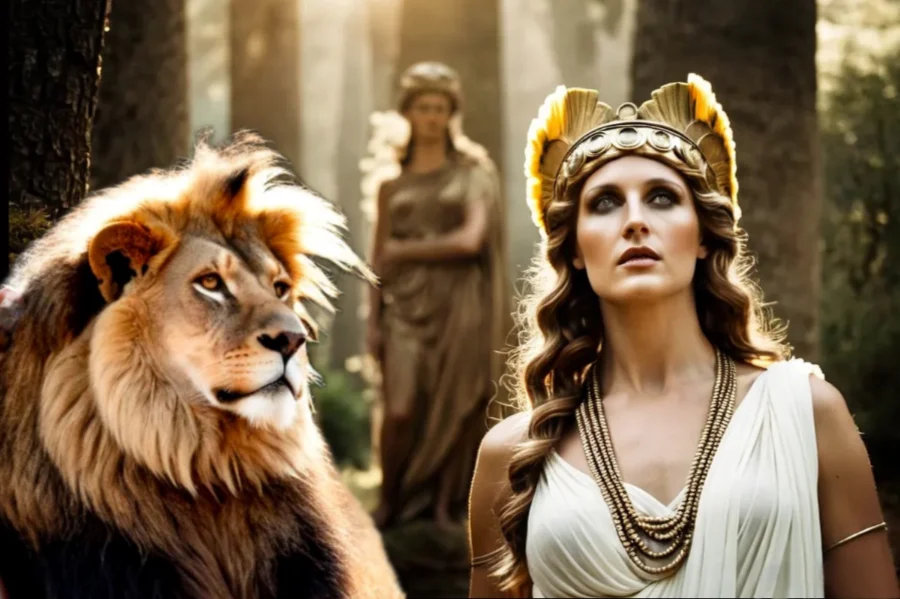
Hera, who had set the Nemean lion free, induced madness in Heracles.
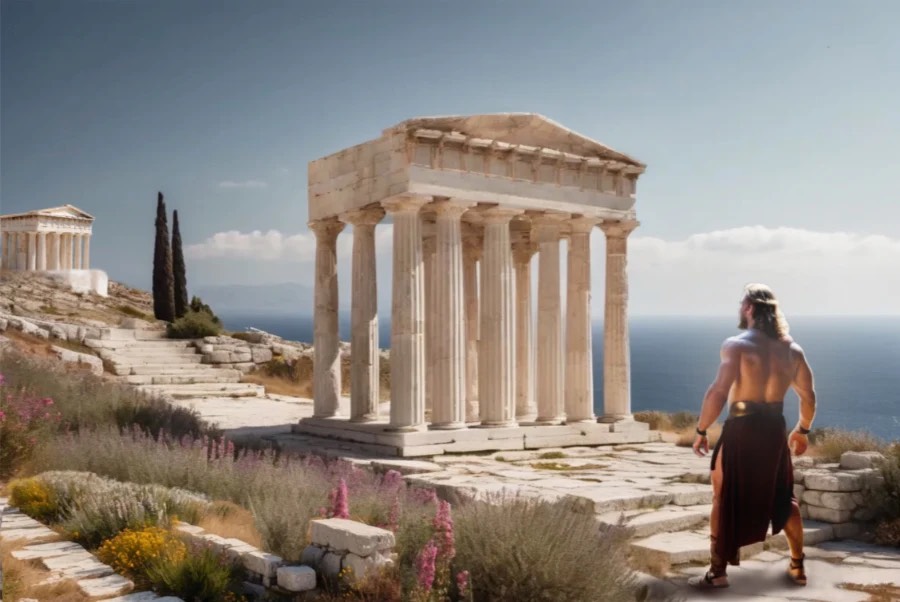
Heracles deeply repented of his deed and sought guidance from the oracle of Delphi.
Apollo’s priestess, Pythia, advised him to serve his uncle Eurystheus, king of Mycenae, for twelve years. Eurystheus, a grandson of Perseus, sent him to perform twelve impossible feats, the twelve labors, which Heracles completed within eight years and one month. The first of these labors was to bring back the golden hide of the notorious man-eating Nemean lion.
Heracles set out to find the lion, and while walking from Argos to Corinth, he came to the town of Cleonae, where he met and stayed with a poor shepherd named Molarchus. Molarchus was about to sacrifice his best ram when Heracles advised him otherwise. He told him to keep it for thirty days until his return and sacrifice it to Zeus. But if he does not return, sacrifice the ram and offer it to him, honoring him as a dead hero.
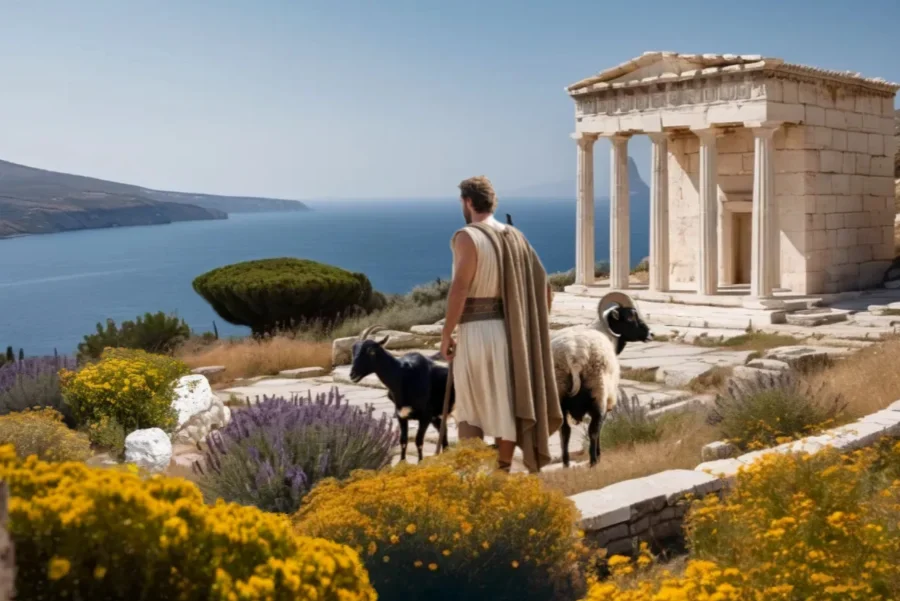
The young shepherd waited thirty agonizing days for the return of Heracles.
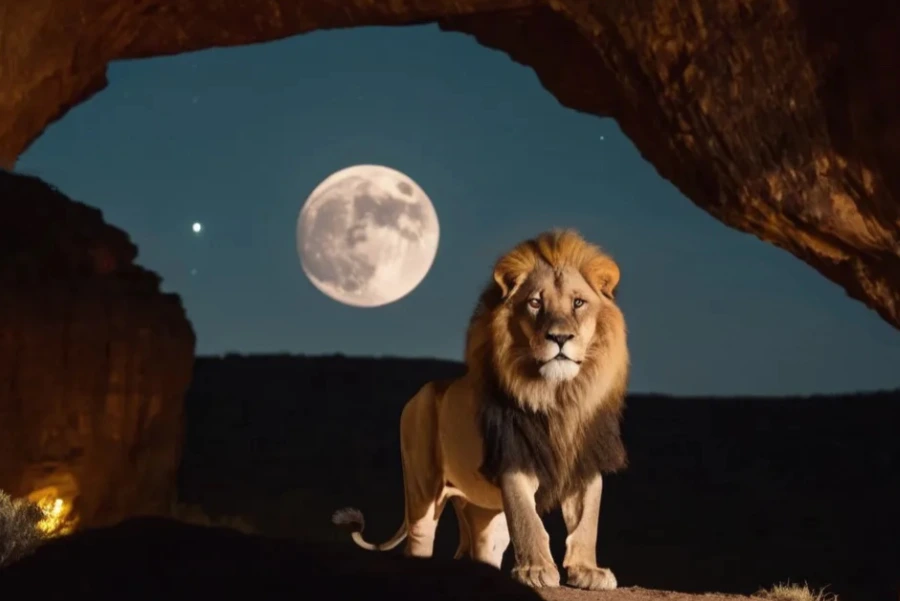
Some say that Selene, the goddess of the moon, gave birth to the lion and gifted it to Hera.
When Hercules arrived at Nemea, he sought out and found the lion. Initially, he used his bow and arrows, but they proved useless as the lion’s fur was impenetrable. His dagger proved useless, too. Then he resorted to using his club and attacked it. The lion hid in its cave, and while inside, Hercules blocked one of the two entrances and determinedly entered the cave. This time, leveraging his legendary strength, he suffocated the lion in the dark confines of the cave.
After slaying the lion, he tried but failed to skin it. He managed to skin it only with Athena’s help, who advised him to use its sharp claws. Carrying the carcass of the lion on his shoulders and wearing its golden hide, Heracles returned to Cleonae. There, he found Molarchus preparing, on the last day, to sacrifice the ram in his honor, thinking he was dead. Instead, they sacrificed it to Zeus, the savior, and he set off for Mycenae.
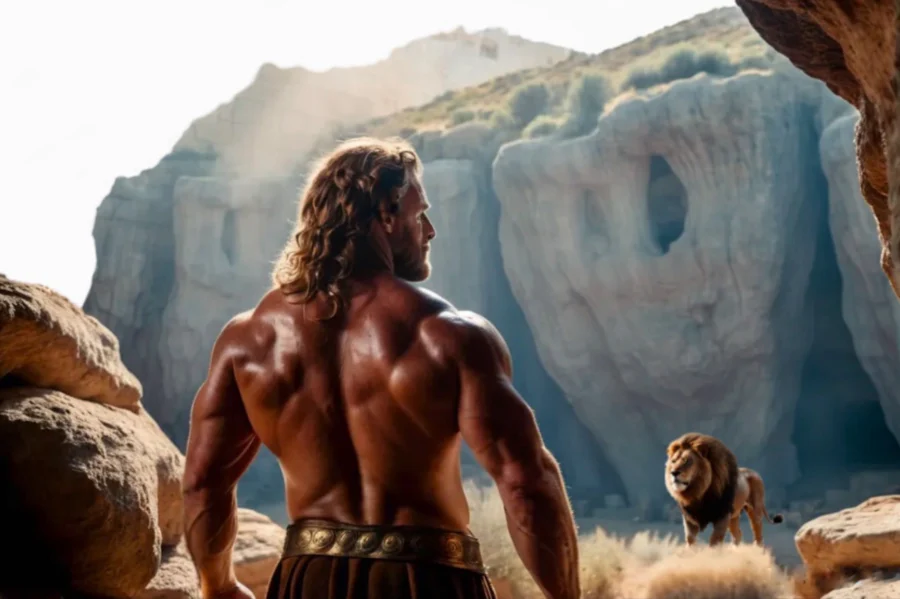
The young shepherd waited thirty agonizing days for the return of Heracles.
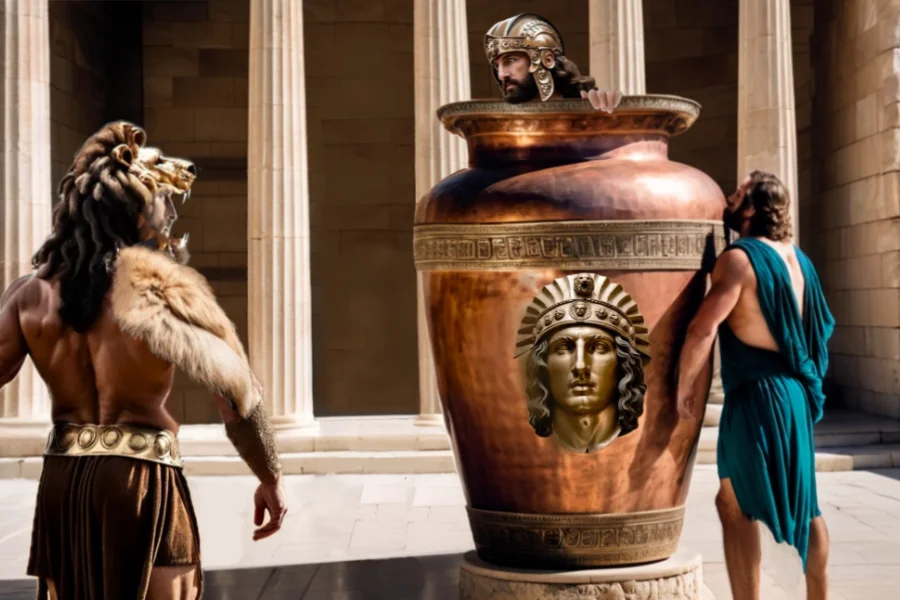
Some say that Selene, the goddess of the moon, gave birth to the lion and gifted it to Hera.
Upon seeing Hercules with the lion skin, King Eurystheus was shocked. He thought he was a lion, and in a state of terror, he took refuge inside a large copper jar. He forbade Heracles from entering the city again and ordered him to display the results of his labors in front of the city gates. From then on, the tasks would become increasingly difficult, and Hercules would get information about them from a herald. His next labor would be the extermination of the monster Hydra.
To honor Zeus for his divine help, Heracles founded the eponymous Naemean games. Together with the Olympic, Pythian, and Isthmian games, they constituted the principal athletic games of Greece. During the games around August, there was a truce and a complete pause of hostilities, but in contrast to the Olympic Games, they were held every two years. They started in 573 BC in honor of Zeus and are still held every two years to this day. With a length of 178 meters and a capacity of 40,000 spectators, this stadium ranks among the biggest in the ancient world.
The American Archaeological School and the University of Berkeley were instrumental in restoring the stadium, spending almost two decades on excavation work starting in 1974. However, as we shall see, this stadium has additional astronomical associations.
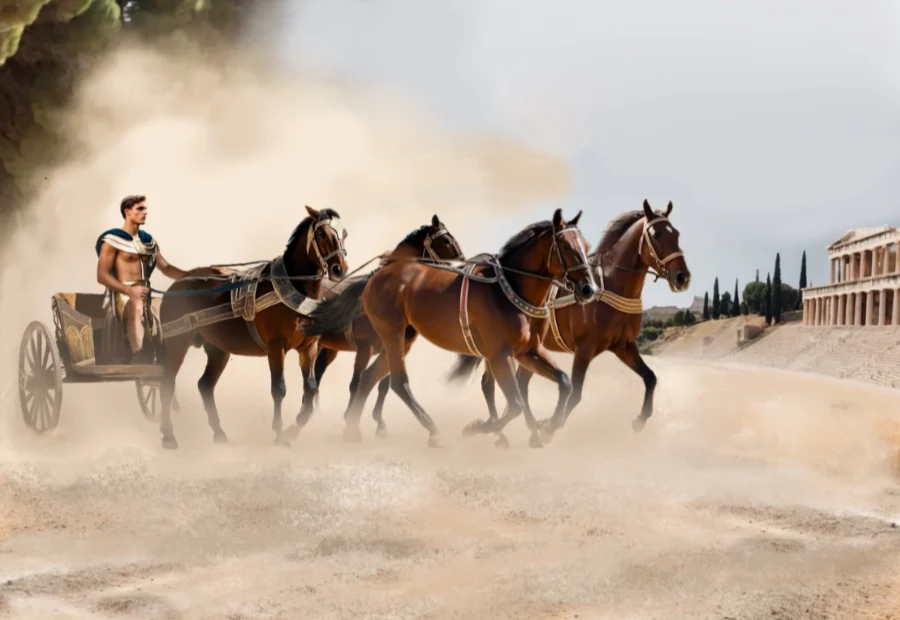
The young shepherd waited thirty agonizing days for the return of Heracles.
Some say that Selene, the goddess of the moon, gave birth to the lion and gifted it to Hera.
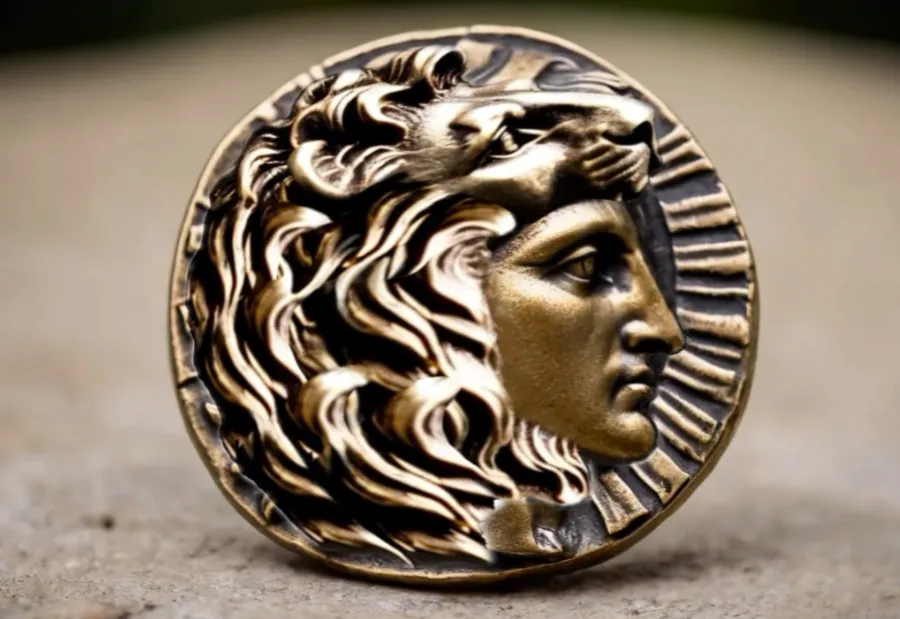
Alexander the Great felt a strong bond with Hercules, as evidenced by the depictions of him in art and coinage, where, just like Hercules, he wore a lion’s head as a helmet. In fact, Alexander’s family viewed Heracles as their ancestor, and wearing the lion’s head, which symbolized the Nemean lion, showcased this connection. It was not the only family, though. The Ptolemaic dynasty of Hellenistic Egypt, founded by one of the closest generals of Alexander and fellow Macedonian Ptolemy, also believed their lineage traced back to Heracles. What better way to honor your eponymous ancestor than to triumph in the games he established, as queen Berenice II (of Coma Berenices renown), the wife of Ptolemy III, king of Egypt, did in the quadriga race (a kind of chariot invented by the legendary Erichthonius, symbolizing the constellation Auriga) in 243 BC?
Since then, Hercules has used the lion’s hide as armor, and the gods immortalized the lion among the stars. Hercules would go on to complete more labors, some of which we find etched among the stars.
.