introduction to The mythical winged horse
Key takeaways
- Pegasus is a dim constellation in the northern hemisphere.
- It is one of Ptolemy’s original 48 constellations.
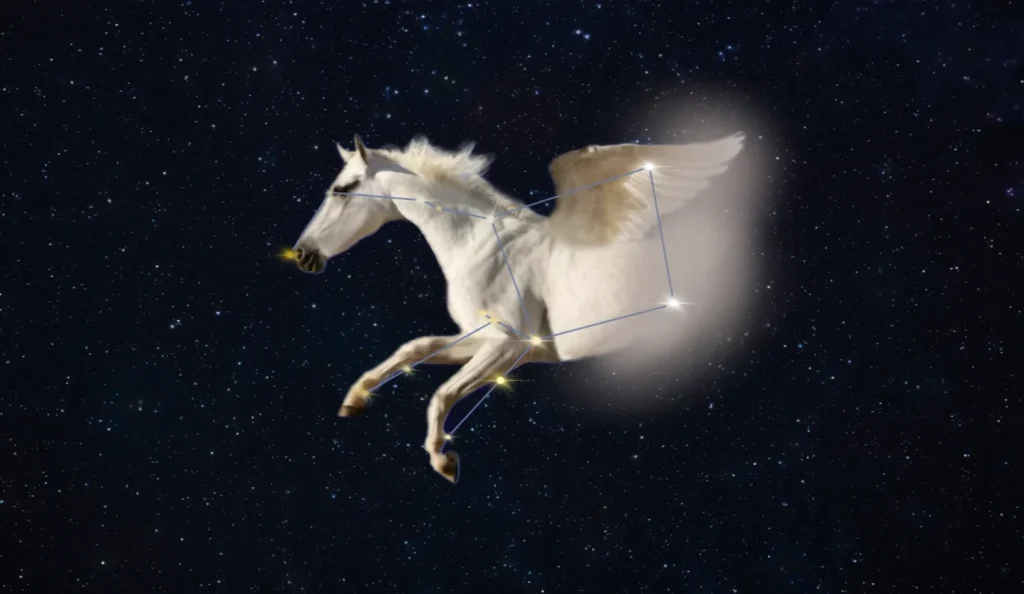
- It represents a mythical, winged horse, the offspring of Poseidon and Medusa.
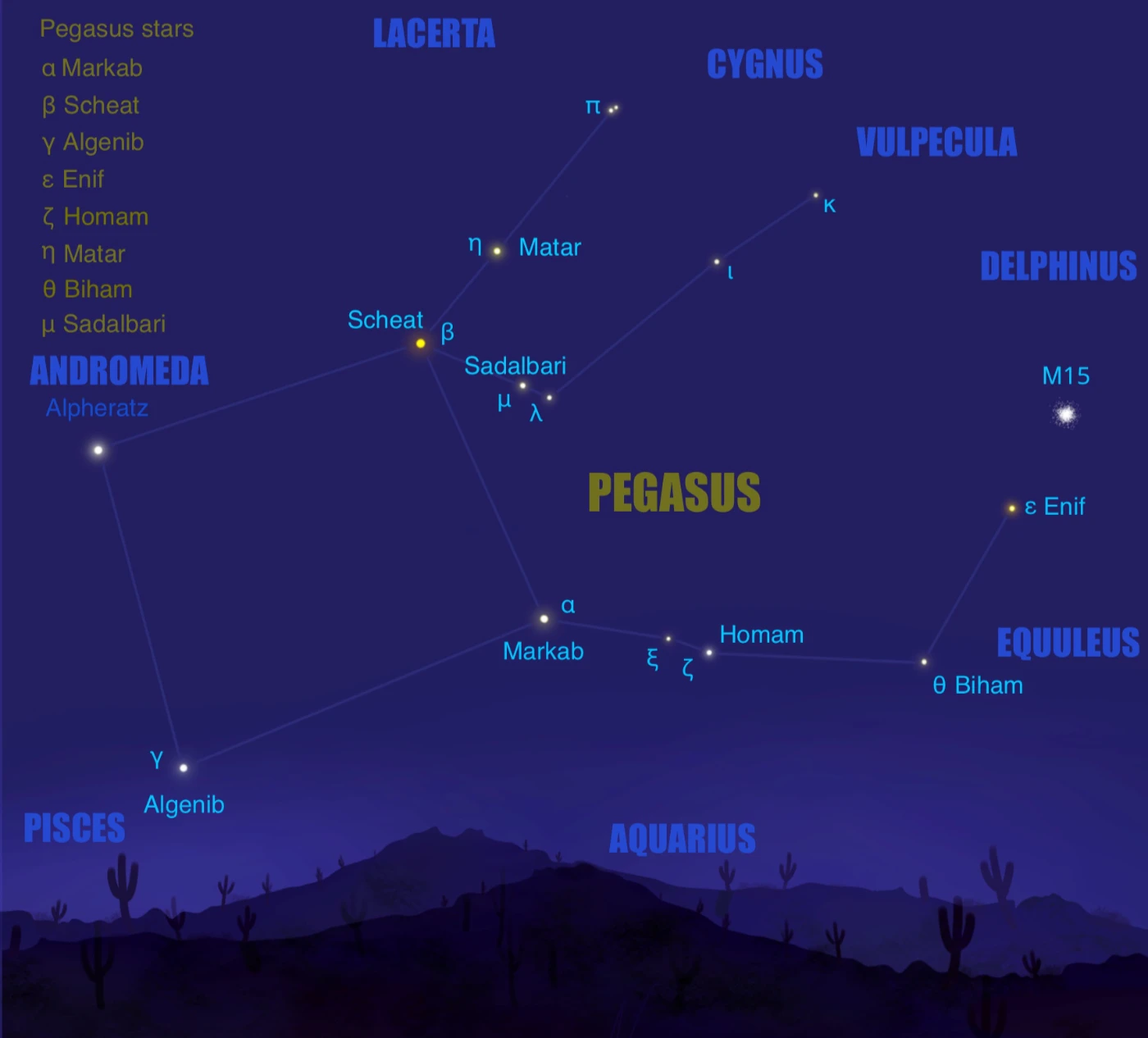
- It contains one Messier object, the globular cluster M15.
- It contains only galaxies.
- The brightest star’s name is Markab.
INTRODUCTION
Beginner’s map of PEGASUS
THE PEGASUS MYTH
THE MYTH AT A GLANCE
The hero Perseus was tasked with killing the Gorgon Medusa, a hideous female creature. An impossible task that was only made possible with the help of two gods, Hermes and Athena. The moment Perseus slew Medusa, a winged horse, Pegasus sprung from her blood. Pegasus was later immortalized in the sky.
The mythological tales woven around the Pegasus constellation take us back to ancient Greece, before the birth of Heracles.
Pegasus is the iconic winged horse of Greek mythology. His mother was the gorgon Medusa. There were three Gorgons. Stheno, Euryale, and Medusa. The first two were immortal. They were hideous female monsters, so terrifying that they invariably turned anyone who looked at them to stone.
Ancient writers gave us differing versions of their whereabouts. According to some, they lived beyond Oceanus, near its springs. A place at the edges of Nyx and near the land of the Hesperides. According to others, they lived on the plains of Clisthene of Ionia, Asia Minor, or near the mythical Lake Tritonis in Libya, the name given to North Africa.
Medusa was particularly terrifying. Her head, covered with dragon scales, was snake-haired, her mouth was armed with boar tusks, and she could fly using her golden wings. The hero Perseus ended her life by beheading her, with the aid of Hermes and Athena. Immediately after, Pegasus was born from his mother’s blood.
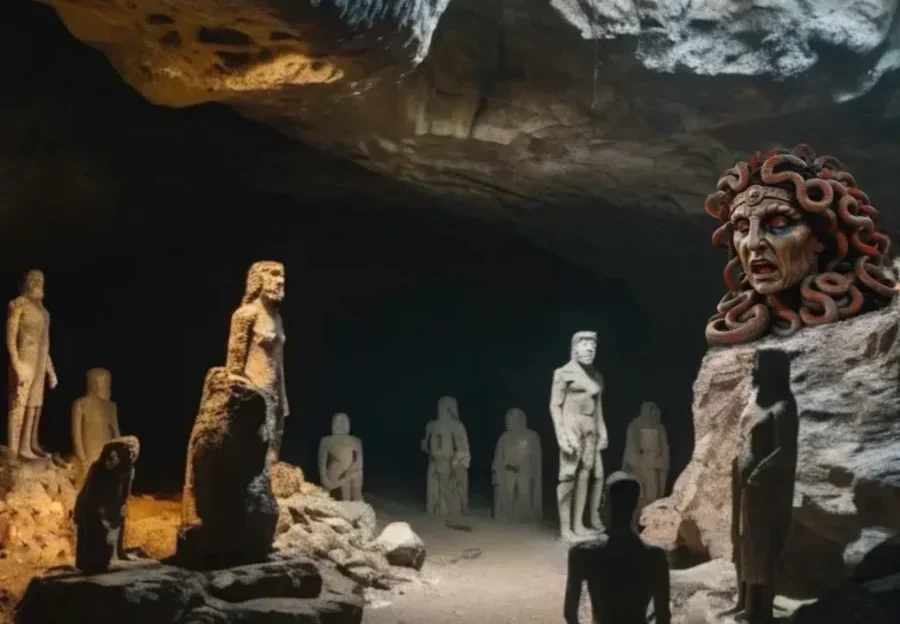
Those unlucky enough to look at Medusa were petrified on the spot.
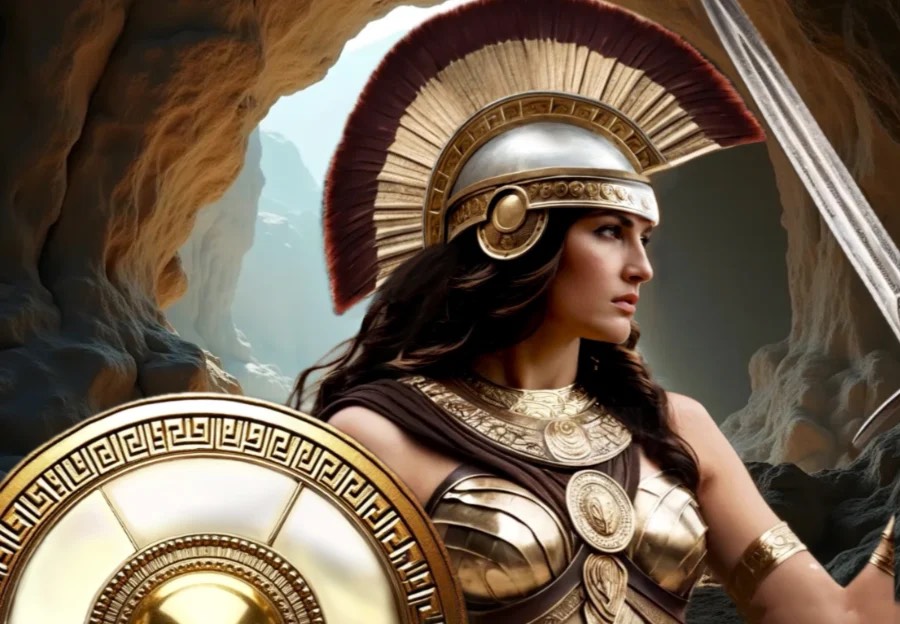
Athena, who had turned Medusa into a monster, helped Perseus slay her.
As soon as Pegasus appeared in front of Perseus, he rode him, flew over the coast of Aethiopia, and saved Andromeda, the daughter of Cepheus and Cassiopeia, from the sea monster Cetus. Perseus married Andromeda, and later he set the winged horse free, where he finally ended up serving Zeus on Olympus.
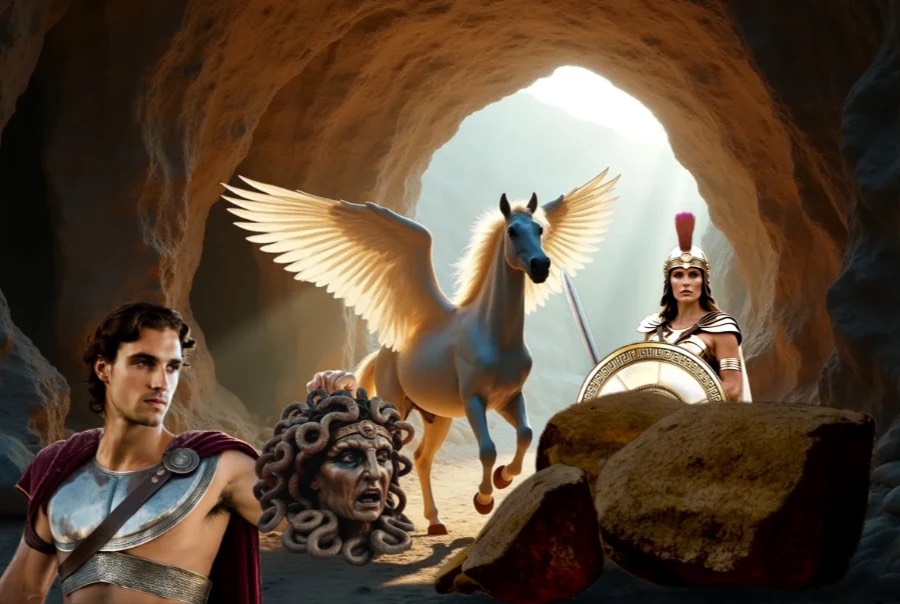
Pegasus sprung from his mother’s blood inside the cave with his brother, the warrior Chrysaor, an ancestor of many monsters.
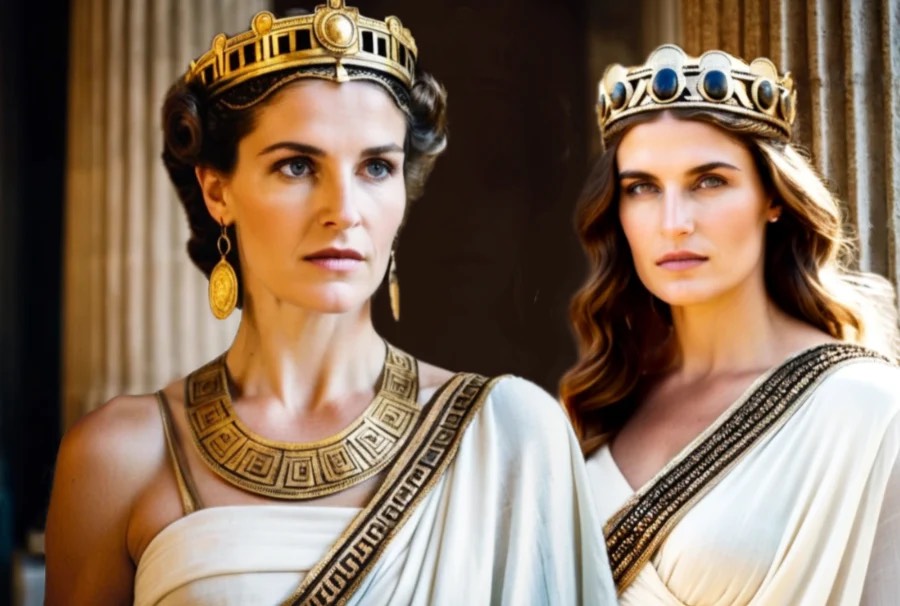
Queen Cassiopeia had bragged that she and Andromeda were more beautiful than the daughters of the sea god Nereus.
After his stay on Olympus, the goddess Athena, who was instrumental in the killing of his mother and his birth, gifted him to the nine Muses, and Pegasus was seen galloping joyfully on lush Mount Helikon. By stumping his moon-shaped hoof there, he created the well of Hippocrene for them. But his tranquil days on the pastures of Helicon would come to an end. He would become the horse of the Corinthian hero Bellerophon, son of Poseidon and Eurynome (or son of Glaucus, a king of Corinth and grandson of Syssiphus), together with Perseus, the greatest Greek hero before the birth of Heracles, and accompany him on his adventures.
Iobates, king of Lycia in Asia Minor, tasked Bellerophon with the extermination of Chimera, a fire-breathing monster with a lion’s and a goat’s head and a dragon’s tail. She was the daughter of the monsters Typhon and Echidna and siblings with Cerberus, Hydra, and Sphinx. Certain that he could not accomplish the task without the help of Pegasus, Bellerophon sought out the flying horse and found it in south Greece.
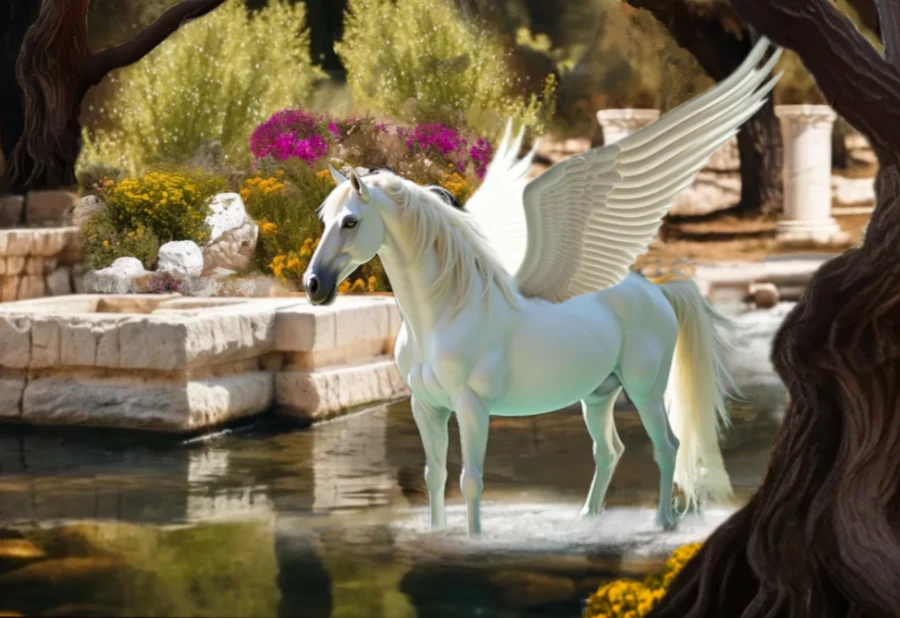
Bellerophon found Pegasus in Corinth, drinking water at the famous fountain Peirene.
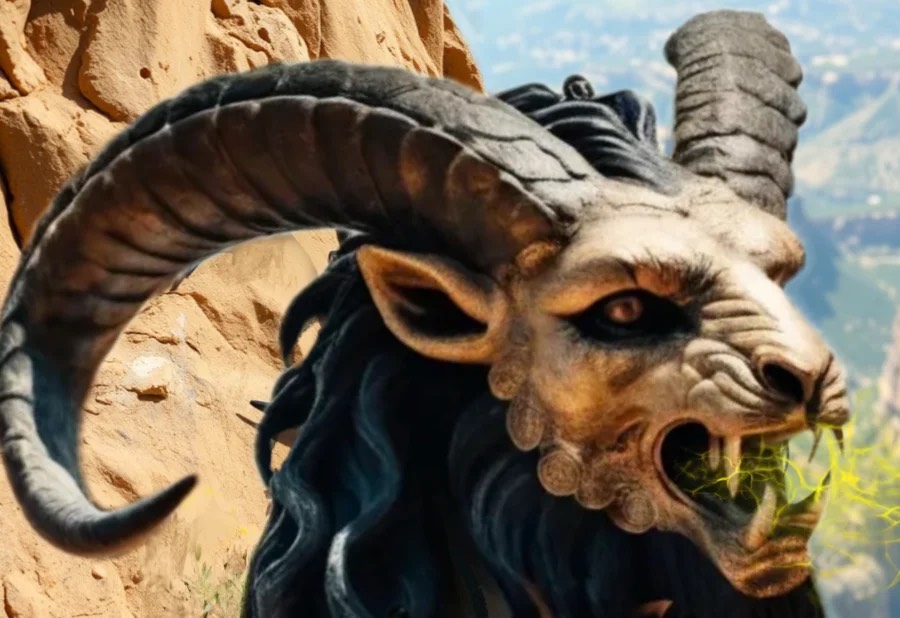
Chimaera, a monstrous cross between a lion, a goat, and a snake, wreaked havoc in ancient Lycia.
One day, while visiting Corinth, he saw Pegasus on the Acropolis of Corinth, drinking water from his favorite fountain, Peirene, sacred to the Muses. As Pegasus was drinking, Bellerophon threw over his head a golden bridle, a gift from Athena, and managed to capture and ride him. Their first exploit would be the slaying of the monster Chimera, a fire-breathing monster with a lion’s and a goat’s head and a dragon’s tail.
After killing Chimaera and after many more exploits, Bellerophon, full of pride and hoping to join the immortals, attempted to fly to Olympus. But an angered Zeus sent Oestrus to Pegasus, who stung Pegasus under the tail, making him throw Bellerophon off his back, leading to the hero’s inglorious death. Pegasus’s earthly adventures ended with his placement by the gods among the stars.
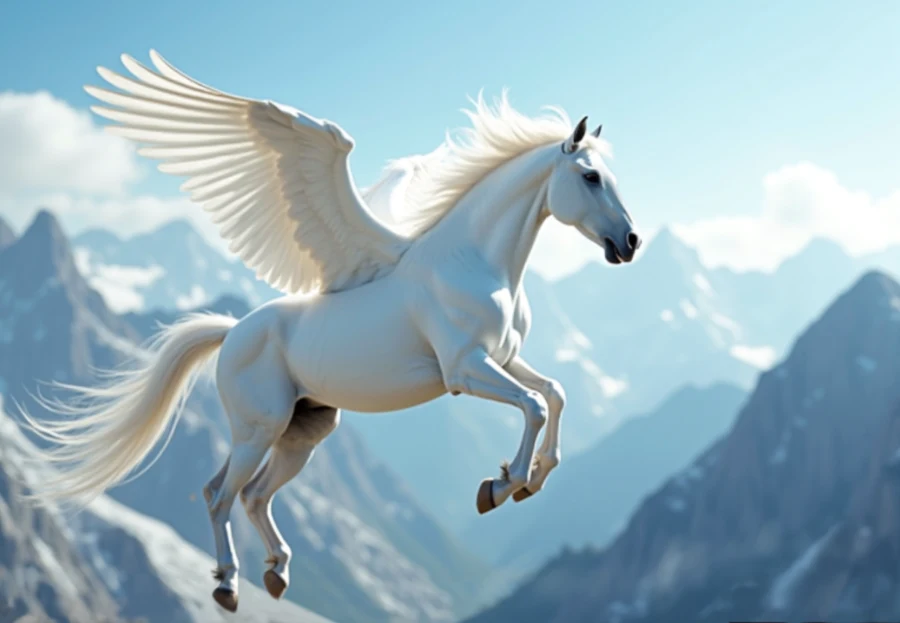
Bellerophon would not live to reach the residence of the gods.
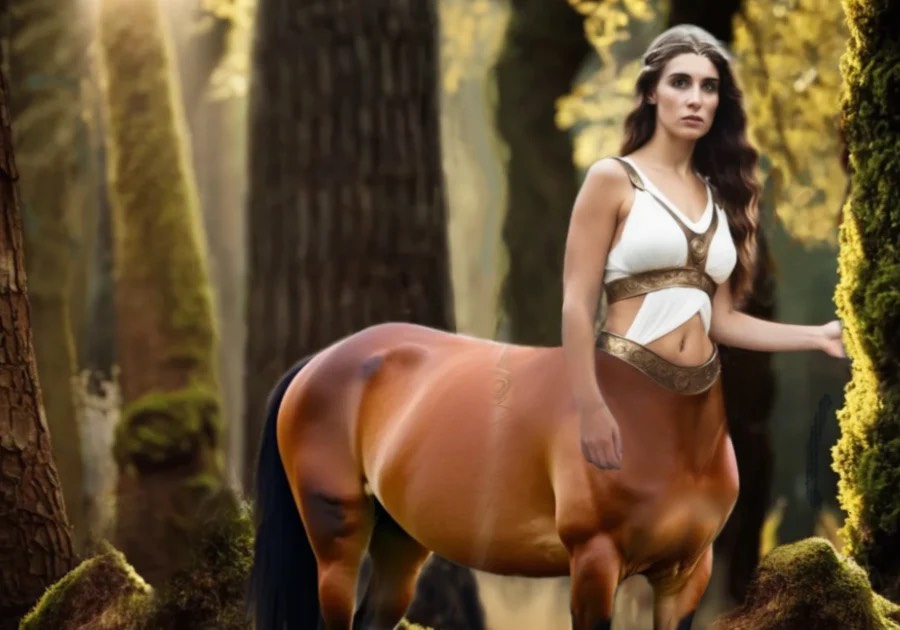
Melanippe, the centaur’s daughter, hid deep in the forests.
However, another myth associated with the constellation Pegasus identifies it as the daughter of the centaur Chiron, Hippe, or Melanippe. Aeolus, who was in love with her, secretly seduced her and left her pregnant. Hippe, when she could not hide her belly anymore, fled to the mountains, where she gave birth. Realizing that soon her father would find her and feeling deeply ashamed, she prayed to the gods not to be recognized by him.
The goddess Artemis transformed both into constellations. She placed them far apart in the sky so that Chiron could not see Hippe, and she hid half of her body, leaving only the front visible. This way, nobody can recognize her gender.